Spent about two hours last friday, studying Jazz Faces - a concert, a theatre, which means a much larger sample space :)
Sadly, had to resort to this kind of amusement at the SF Jazz Fest concert, with Charles Lloyd, Zakir Hussain and Eric Harland.
Have heard some good fusion, this wasn't it. Great musicians, no doubt, are like perfect nuclei. But that alone does not make good fusion - that explosive energy. Energy like when Remember Shakti performs. (Listen at the cosmic elevator).
Tuesday, November 07, 2006


Sunday, October 15, 2006
Exposed

To the explosive music of the fabulous Fishtank Ensemble this friday. Roma, klezmer, flamenco and Japanese, French swing, Transylvanian... Amazing music!
Some of the songs in their new album Super Raoul -Bordeas , Ringo Bushi (or the "Apple Song"), Le Kidnappeur, Hopa Di Bida, Shamisen Master and Suite Romaine.
Listening to them perform at this tiny, ill-lit, but cozy room brought back memories of an interesting baroque concert I attended at a small church in Austria several years ago. Only with a generous dose of Snatch added in. ;)
Some really cool instruments too - do you know how the Violatromba sounds? or (ok, this might be more common) heard someone play a saw?
Wednesday, October 04, 2006
Culture Is Like Coffee
For some, it is an addiction - culture, coffee... I am not one of them.
It is shows like the Double Take at the EMP that make me want to break on through (to the other side).
If you live in or plan to visit Seattle, and are either extremely interested in art or completed bored by it - go see this show. Here are the few reasons you should -
1) These are some of the best pictures ever created by some of the greatest master artists.
2) Some of them have never been on public display in more than 50 years*
3) You don't need to know art** - the audio-guide is one of the best I have ever used in any museum. It gives you enough technical details on each piece, but also lets you form your own impressions.
4) Just 28 images, so you will not be overwhelmed!
5) You can walk up close to the picture/photograph and actually see the texture - yes, you can get that close.
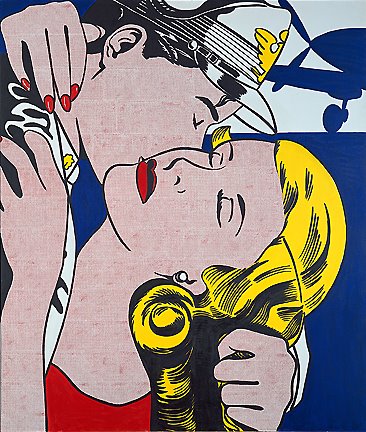
6) There is something for everyone - Manet to de Kooning.
7) At $8, its less than a movie to go see it!
The exhibition lets you plunge into a pool of great works, with no historic anchors or cultural shackles - so you are free at last to look at these paintings as they were meant to be. It lets you see the abstract in impressionist paintings and the realism/emotional core of post-impressionist or modern art. You finally see the great masters for who they really were - innovators, rebels, risk-takers. And discover the sea of emotions and grace that lies beneath the seemingly loud and rebellious art of the post-impressionists.
And what is even better, its not a tedious art history lesson, but something you will just experience as you walk through and see each set as it is laid out.
The curator, Paul Hayes Tucker, has neatly divided the 28 pieces into small sets. Some of the pairings are absolutely daring and bold. There are sets where the audio-guide is indispensable. But once the context has been set by the guide, you begin to have these amazing "ah-ha" moments, that are completely your own.
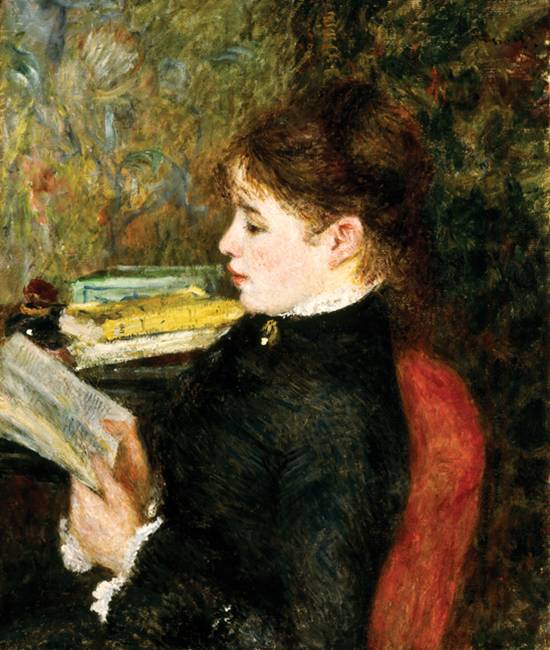
For instance, Gauguin and Yanobe - who would have thought?! But once you are walked through the essential color, line, shape, space and texture..., you slowly begin to see the alienation and longing. Initially the Gauguin is the one that seems real, but wait, isn't the Yanobe a photograph (and hence more real)? Slowly you see facades disappear and the art appear.
Another set shows you how even great artists sit on shoulders of giants who preceeded them. Here is a perfect example, the Grand Canal in Venice. Over centuries so many renowned artists had painted it, that Monet is said to have been absolutely reclutant to go there - what could his work possibly add?
But as you can see below, his work is a culmination of sorts, of all the great artists before him - Canaletto's photographic accuracy, Turner's dream-like hazy quality, Manet's bold strokes. Now when you look at Monet's Grand Canal, you see how all these pieces contribute their own influences to his and yet, his work is just as unique.
And no visit to a gallery is complete, until you discover a few new artists. One of my artist-discoveries here was - Eric Fischl (below, is his - Krefeld Project, Bedroom, #6 (Surviving the Fall Meant Using You for Handholds) (2004)).

Makes you almost lookaway, like you are going to be caught peeping through the blinds...
* They might never be displayed in public ever again - they are from Paul Allen's personal collection.
** And a very accessible introductory video featuring Dr. Neils Crane (aye, of Fraiser fame) and the curator Paul Tucker.
 |  |
It is shows like the Double Take at the EMP that make me want to break on through (to the other side).
If you live in or plan to visit Seattle, and are either extremely interested in art or completed bored by it - go see this show. Here are the few reasons you should -
1) These are some of the best pictures ever created by some of the greatest master artists.
2) Some of them have never been on public display in more than 50 years*
3) You don't need to know art** - the audio-guide is one of the best I have ever used in any museum. It gives you enough technical details on each piece, but also lets you form your own impressions.
4) Just 28 images, so you will not be overwhelmed!
5) You can walk up close to the picture/photograph and actually see the texture - yes, you can get that close.
6) There is something for everyone - Manet to de Kooning.
7) At $8, its less than a movie to go see it!
The exhibition lets you plunge into a pool of great works, with no historic anchors or cultural shackles - so you are free at last to look at these paintings as they were meant to be. It lets you see the abstract in impressionist paintings and the realism/emotional core of post-impressionist or modern art. You finally see the great masters for who they really were - innovators, rebels, risk-takers. And discover the sea of emotions and grace that lies beneath the seemingly loud and rebellious art of the post-impressionists.
And what is even better, its not a tedious art history lesson, but something you will just experience as you walk through and see each set as it is laid out.
The curator, Paul Hayes Tucker, has neatly divided the 28 pieces into small sets. Some of the pairings are absolutely daring and bold. There are sets where the audio-guide is indispensable. But once the context has been set by the guide, you begin to have these amazing "ah-ha" moments, that are completely your own.
For instance, Gauguin and Yanobe - who would have thought?! But once you are walked through the essential color, line, shape, space and texture..., you slowly begin to see the alienation and longing. Initially the Gauguin is the one that seems real, but wait, isn't the Yanobe a photograph (and hence more real)? Slowly you see facades disappear and the art appear.
 Gauguin | 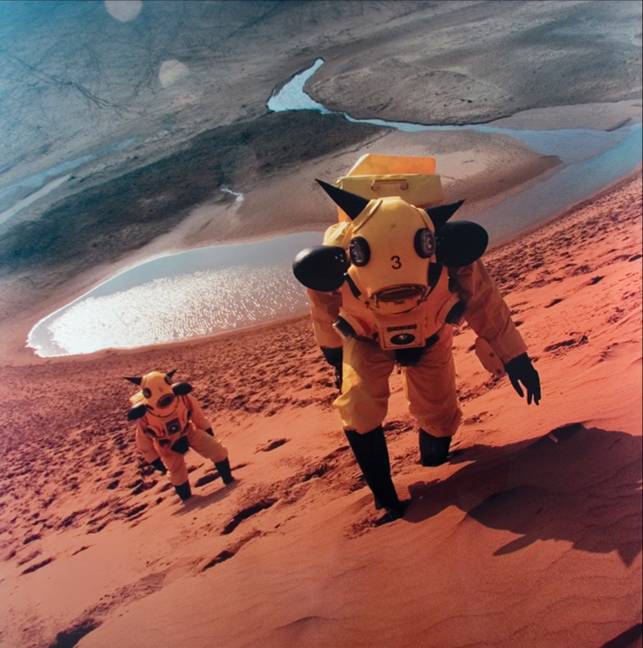 Yanobe |
Another set shows you how even great artists sit on shoulders of giants who preceeded them. Here is a perfect example, the Grand Canal in Venice. Over centuries so many renowned artists had painted it, that Monet is said to have been absolutely reclutant to go there - what could his work possibly add?
But as you can see below, his work is a culmination of sorts, of all the great artists before him - Canaletto's photographic accuracy, Turner's dream-like hazy quality, Manet's bold strokes. Now when you look at Monet's Grand Canal, you see how all these pieces contribute their own influences to his and yet, his work is just as unique.
 Canaletto | 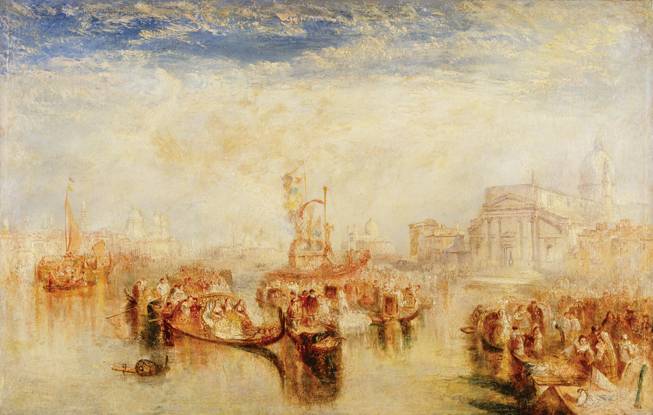 Turner |
 Manet |  Monet |
And no visit to a gallery is complete, until you discover a few new artists. One of my artist-discoveries here was - Eric Fischl (below, is his - Krefeld Project, Bedroom, #6 (Surviving the Fall Meant Using You for Handholds) (2004)).

* They might never be displayed in public ever again - they are from Paul Allen's personal collection.
** And a very accessible introductory video featuring Dr. Neils Crane (aye, of Fraiser fame) and the curator Paul Tucker.
Friday, September 29, 2006

Sunday, September 10, 2006
Pining for the Opposite of Loneliness
 Once in a while, there comes a movie that leaves you in awe. But these are the movies where you watch the movie and then all the other "bonus features" the DVD has to offer... and watch the movie again with the director's commentary (yes, you do, just admit it).
Then there are movies where one element simply stuns you. It could be the music or an actor or the cinematography. It is as if you have spotted a work of art - you don't need to watch the additional scenes or have the director point out things to you. No handholding required. You can just watch the movie over and over again, to catch that one element.
Fa yeung nin wa (In the Mood for Love) is one of them movies. But this is not a review of the movie, or the director (Wong Kar Wai). Both are fabulous(, if you really need to know).
It is just about my impressions on the costumes and art direction in the film (both by William Chang). Costumes? Art Direction...?! I know, I know...elements that are often taken for granted. After all, how can it matter what someone wears, as long as it looks authentic and the same goes with the sets. Watch this movie - to see the power clothes can have on your emotions.
Art Direction. The color palette here is predominantly sepia and lighting adds just the right tone to all the colors. The movie is set in the Hong Kong of the 60s. Kar Wai has not taken upon himself to recreate more than a few fixed indoor locations - crowded apartments, offices, a diner and a small place to grab a quick meal. And some dimly lit streets. Nothing else. Oh yes, the mirrors and curtains, the rain and (cigarette) smoke. The entire movie is closed in on the two main characters. But you could not care less about the rest.
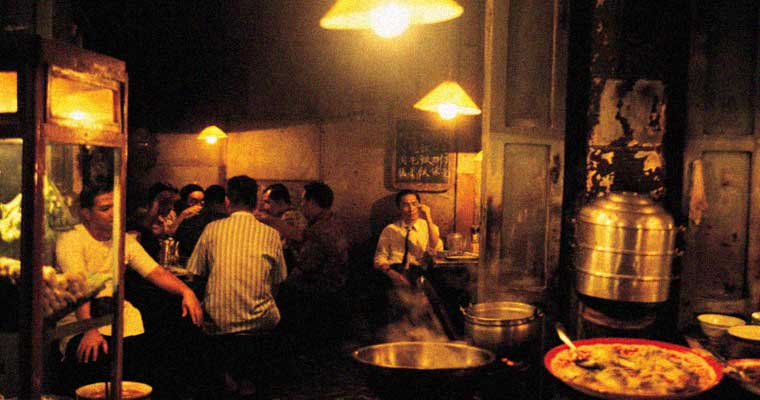 To see what I mean, just look for the repeated scenes where Cheung goes out with her tiffin-carrier type box to get dinner from a hole-in-the-wall diner. The exposed lightbulbs and the depressed and exhausted men, the walls, her wait and the walk back home. As a director, I admire Kar Wai, for having put so much faith in these elements. He does get to choregraph the slow motion moves. But after a while, you realize that the slow motion shots are just so you can drink in all the images and carefully hold them inside of you. For words are hardly the best way to convey a mood this intense.
Maggie Cheung's cheongsams (about 20 of them, I think) can add about 4 more layers of depth to the story. The high collar, fitted style, her coiffured hair, impeccable makeup and those dagger heels. All this just throws her right in character - its almost like one of those ornately twisted and braided bamboo displays you see in chinese stores. Her stifled expressions and few words are almost a distraction. All you need to do is watch her as she sits or stands or moves in these cheongsams.
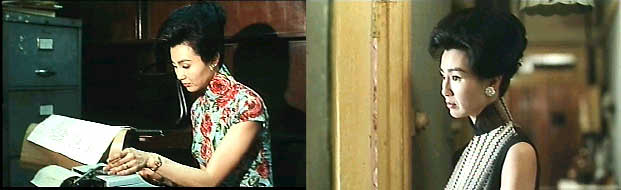 At the end of it, you are not in love, but in the mood for it, most definitely.
"It was from an essay of G. K. Chesterton's on a fairly unknown painter called G. F. Watts. "Man knows that there are in the soul tints more bewildering, more numberless, and more nameless than the colors of an autumn forest. . . . Yet he seriously believes that these things can every one of them, in all their tones and semitones, in all their blends and unions, be accurately represented by an arbitrary system of grunts and squeals. He believes that an ordinary civilized stockbroker can really produce out of his own inside noises which denote all the mysteries of memory and all the agonies of desire." In other words, language can never accommodate the enormous reality beyond it...." (src: a PEN article on Borges)
* The title comes from the wonderful little book - Everything is Illuminated... rather the motion picture based on the same. Alex Perchov, the Ukranian has a 'premium' english vocabulary. Go watch ;)
Thursday, August 24, 2006
Long live Pluto!

The God of the Dead is Dead[1]. After 76 years as a planet, Pluto has been demoted.
Given that it takes the "drawf planet" 248.5 earth-years to make one circle of the sun. It has only been a full planet for about one-fourth of a year - one season?! So, alas! Now it will be the long winter of its discontent [2].
[1] Plu·to
n.
- Roman Mythology. The god of the dead and the ruler of the underworld.
- The ninth and usually farthest planet from the sun, having a sidereal period of revolution about the sun of 248.5 years, 4.4 billion kilometers (2.8 billion miles) distant at perihelion and 7.4 billion kilometers (4.6 billion miles) at aphelion, and a diameter less than half that of Earth.
[2]the Unfinished, sent before his time into this breathing world, scarce half made up - bit would work nicely, too.
Monday, August 21, 2006
Song of the Little Road
I recently watched the Apu Trilogy and was struck by the amazing music. Who can forget the Shehnai piece by Ustad Bismillah Khan[1] in Pather Panchali? It takes great genius to get noticed over the startling, stunning scenes by Ray and to the Ustad, that comes naturally.
My lessons in Carnatic music (ages ago) barely help me understand the nuances of his performance, I cannot even place the raag he plays, but all that hardly matters.
"At the Everyman Cinema there is a season of Satyajit Ray. He watches the Apu trilogy on successive nights in a state of rapt absorption. In Apu's bitter, trapped mother, his engaging, feckless father he recognizes, with a pang of guilt, his own parents. But it is the music above all that grips him, dizzyingly complex interplays between drums and stringed instruments, long arias on the flute whose scale or mode - he does not know enough about music theory to be sure which - catches at his heart, sending him into a mood of sensual melancholy that last long after the film has ended.." -J.M. Coetzee's Youth
Notes:
[1] May his soul rest in peace. 1, 2, 3...
[2] Song of the Little Road is Pather Panchali.
[3] Incidentally, there was a piece on the Saarangi that I heard this Saturday that was just tantalizing. This is the first time I have got a chance to really experience the instrument being played live (as in, not the cheap-seats so far away, I might as well have watched the performance on television).
This was part of a wonderful musical night organized by friends. The performers were an eclectic bunch - from grandfathers, to young mothers, to 10 year olds, to semi-professionals, to the sound engineer's stunning ghazal (from Umrao Jaan). What made it so special and inspiring was the love and respect each brought to his/her practice. I was more than impressed to hear that this was their 9th annual concert - given that it is all planned, set and performed by people who claim to be amateurs. :)
My lessons in Carnatic music (ages ago) barely help me understand the nuances of his performance, I cannot even place the raag he plays, but all that hardly matters.
"At the Everyman Cinema there is a season of Satyajit Ray. He watches the Apu trilogy on successive nights in a state of rapt absorption. In Apu's bitter, trapped mother, his engaging, feckless father he recognizes, with a pang of guilt, his own parents. But it is the music above all that grips him, dizzyingly complex interplays between drums and stringed instruments, long arias on the flute whose scale or mode - he does not know enough about music theory to be sure which - catches at his heart, sending him into a mood of sensual melancholy that last long after the film has ended.." -J.M. Coetzee's Youth
Notes:
[1] May his soul rest in peace. 1, 2, 3...
[2] Song of the Little Road is Pather Panchali.
[3] Incidentally, there was a piece on the Saarangi that I heard this Saturday that was just tantalizing. This is the first time I have got a chance to really experience the instrument being played live (as in, not the cheap-seats so far away, I might as well have watched the performance on television).
This was part of a wonderful musical night organized by friends. The performers were an eclectic bunch - from grandfathers, to young mothers, to 10 year olds, to semi-professionals, to the sound engineer's stunning ghazal (from Umrao Jaan). What made it so special and inspiring was the love and respect each brought to his/her practice. I was more than impressed to hear that this was their 9th annual concert - given that it is all planned, set and performed by people who claim to be amateurs. :)
Thursday, August 10, 2006

Tuesday, August 01, 2006
Octopi in the Sky
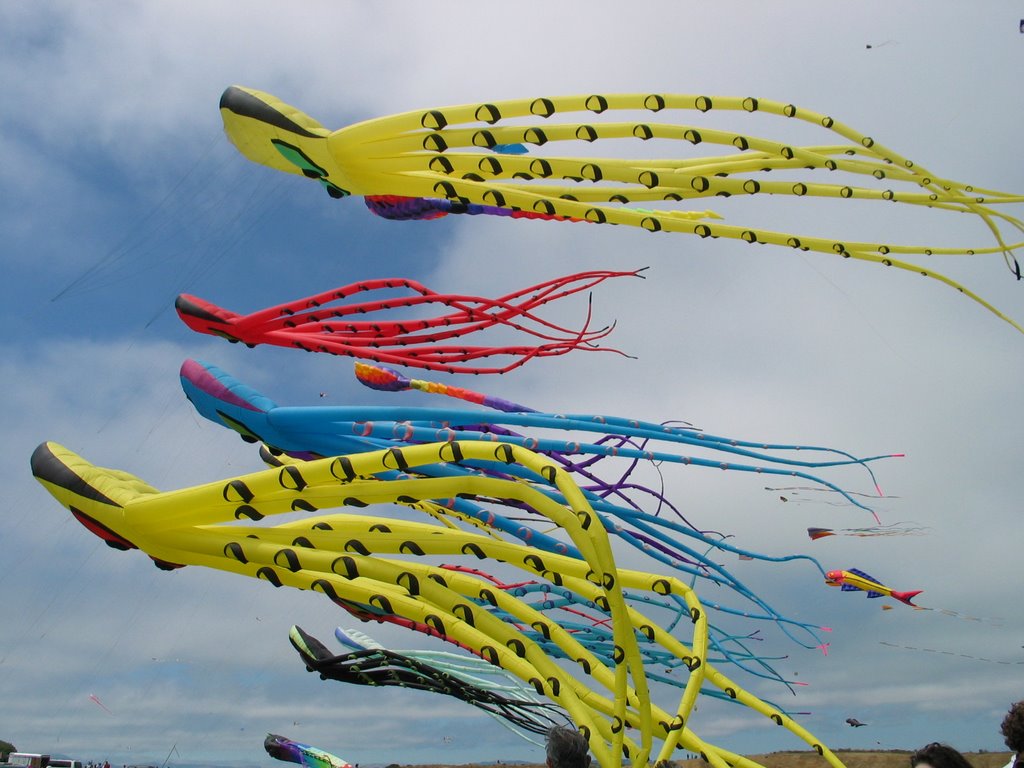
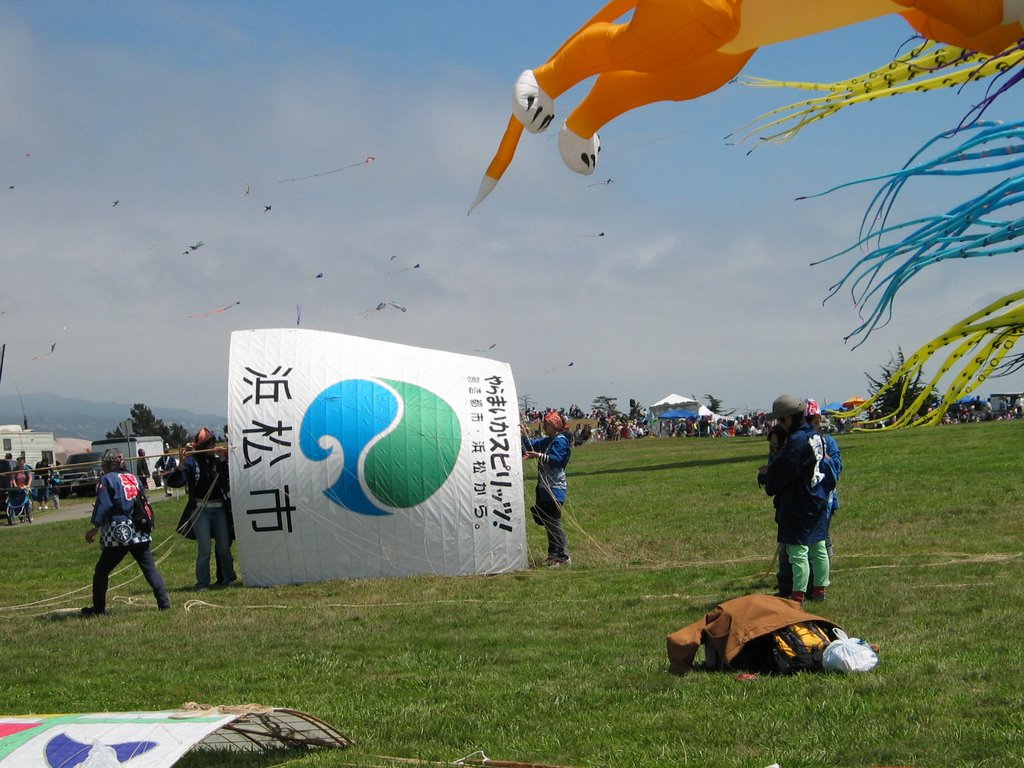
and frogs, wine bottles, an elephant and a cow ... all soaring in the sky, on a nice summer day.
It isn't a Dali or a Frida... - duh! its the kite festival! Madness I tell you, absolute madness.
On the way there my friend tells me he had the weirdest dream - and someone chuckled and said, "Did you see a flying pink elephant?"
and I quipped, "How wonderful it would be if we could just connect a printer to our brain and print the images we see!"
As they say, be careful what you wish for, it might just come true!
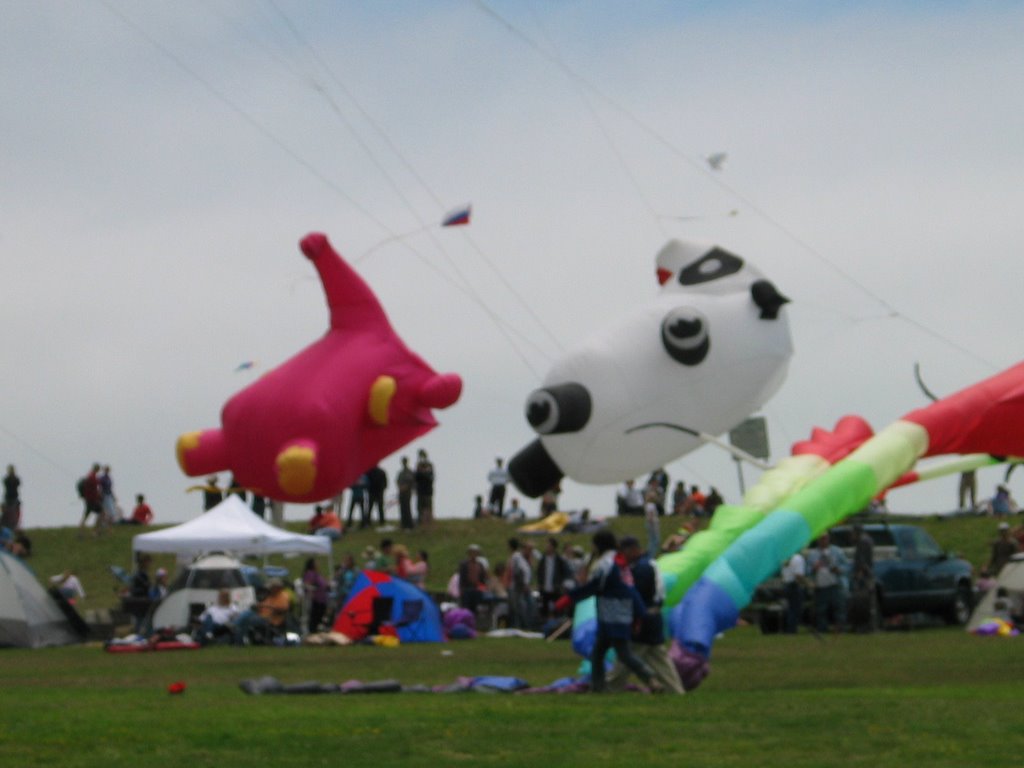
And the craziness was not just in the sky, it was all around us.

I tried shooting a couple of clips on my digital camera - some maverick kite flying and a kite fight.
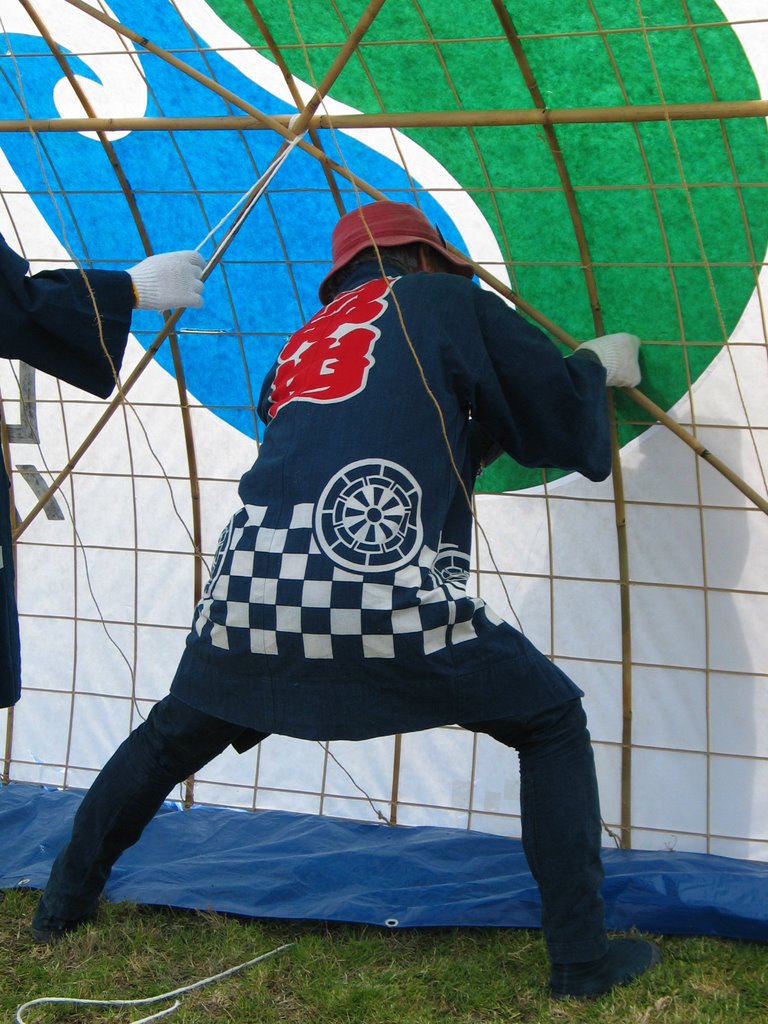
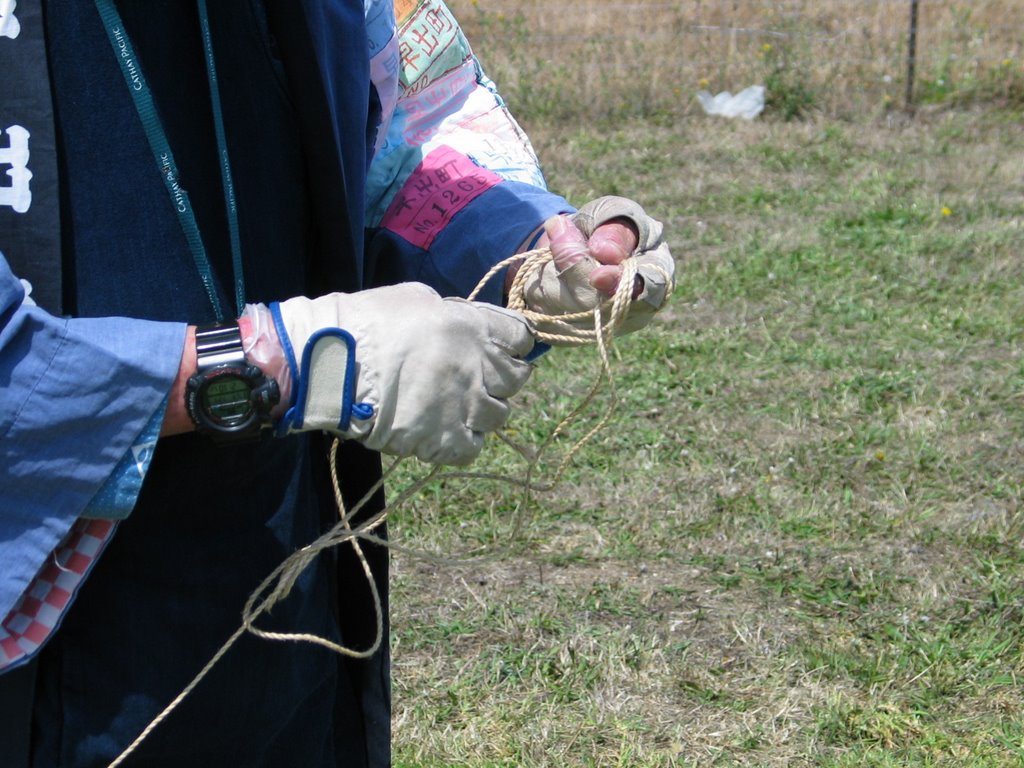
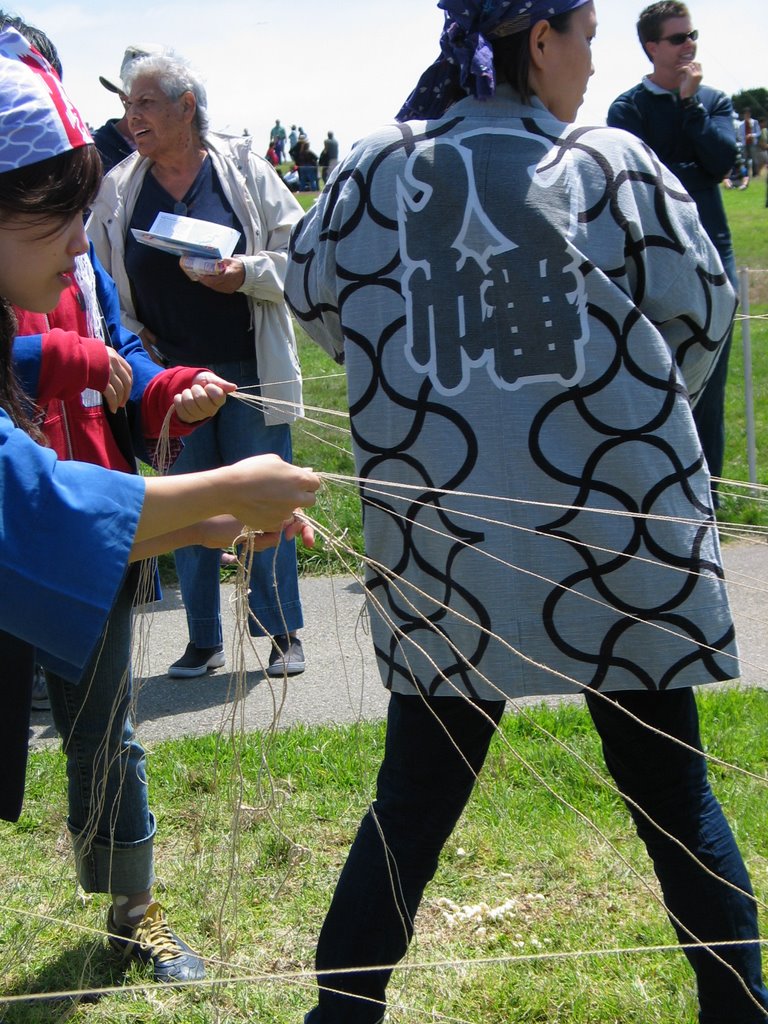
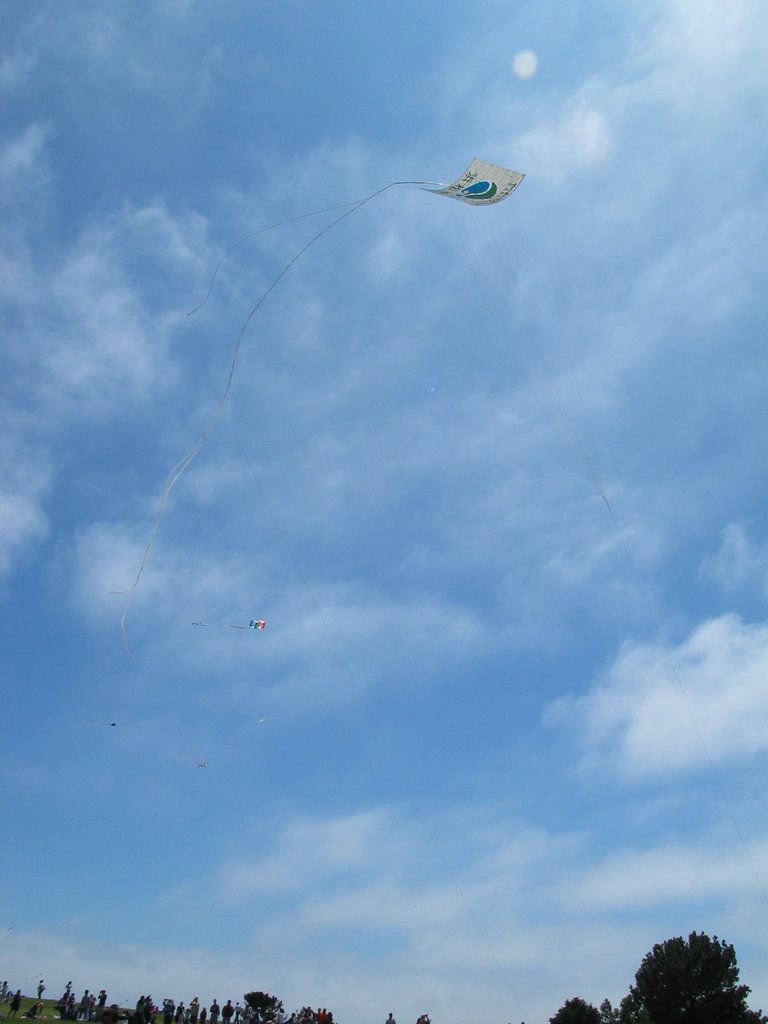
Of course, it ain't a Hamamatsu kite fest until a real kite ( made of paper, bamboo and hemp rope, and launched by a dozen or so people and held by a single person) flies!
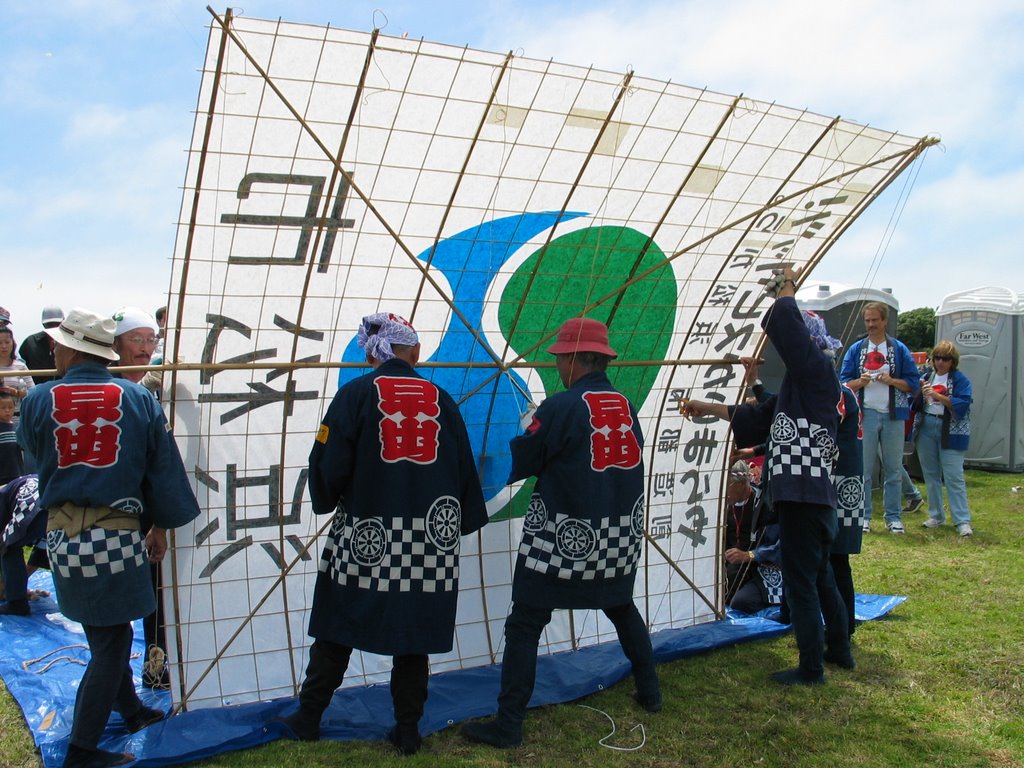



Tuesday, July 11, 2006
Thursday, June 29, 2006
Municator

YellowSheepRiver Municator
At under $150, you can buy it today. Many have compared it to the OLPC project's $100 laptop and fairly so. Both independently try to close the digital divide. The spec for those who are interested is here.
A demo at CeBIT 2006.
This reminds me of the very first computer I ever used (when the number of years I had spent on this planet was still a single digit (decimal!) number). The dB Spectrum. The whole PC was built into the keyboard. You plug the keyboard to your television and a tape recorder - any programs you wrote ( in BASIC) or any games you played could be stored on a cassette. I remember spending long hours on it with my sister, meticulously typing out programs that would in the end printout some banner on the television screen and playing games with the most original and thrill-inducing(chuckle) names like, bombjack and checkered flag.
Friday, June 09, 2006
Funeral
death happens :(
What can you say about a twenty-something guy who died? That he was funny and alive. That he loved Girls and Making Jokes. And Life. And all of us loved him very very much.
A friend of mine - R, went missing last month. And yesterday R's family claimed his body from the police. His body had been found and buried anonymously, a month back.
R left home one evening and never came back.
Wish I had kept in touch. Wish I knew you would leave so soon.
What can you say about a twenty-something guy who died? That he was funny and alive. That he loved Girls and Making Jokes. And Life. And all of us loved him very very much.
A friend of mine - R, went missing last month. And yesterday R's family claimed his body from the police. His body had been found and buried anonymously, a month back.
R left home one evening and never came back.
Wish I had kept in touch. Wish I knew you would leave so soon.
Wednesday, June 07, 2006
Photos
Photogenic:
adj. Attractive as a subject for photography.
Biology. Producing or emitting light; phosphorescent: photogenic bacteria.
Caused or produced by light: photogenic seizures.
"Wow, you look so nice in the picture."
"Is that really you?"
"If you took better care of your skin, you would look so much better"
"Did you get your hair set for this? It usually looks so wild"
And all along you thought that is how you looked - because you never found/took the time to look in the mirror on your way out.
adj. Attractive as a subject for photography.
Biology. Producing or emitting light; phosphorescent: photogenic bacteria.
Caused or produced by light: photogenic seizures.
"Wow, you look so nice in the picture."
"Is that really you?"
"If you took better care of your skin, you would look so much better"
"Did you get your hair set for this? It usually looks so wild"
And all along you thought that is how you looked - because you never found/took the time to look in the mirror on your way out.
Tuesday, May 30, 2006
Imagine
Imagine there's no heaven
It's easy if you try





A little trip to Carmel Mission and the drive along the breathtaking Pacific Coast Highway
It's easy if you try
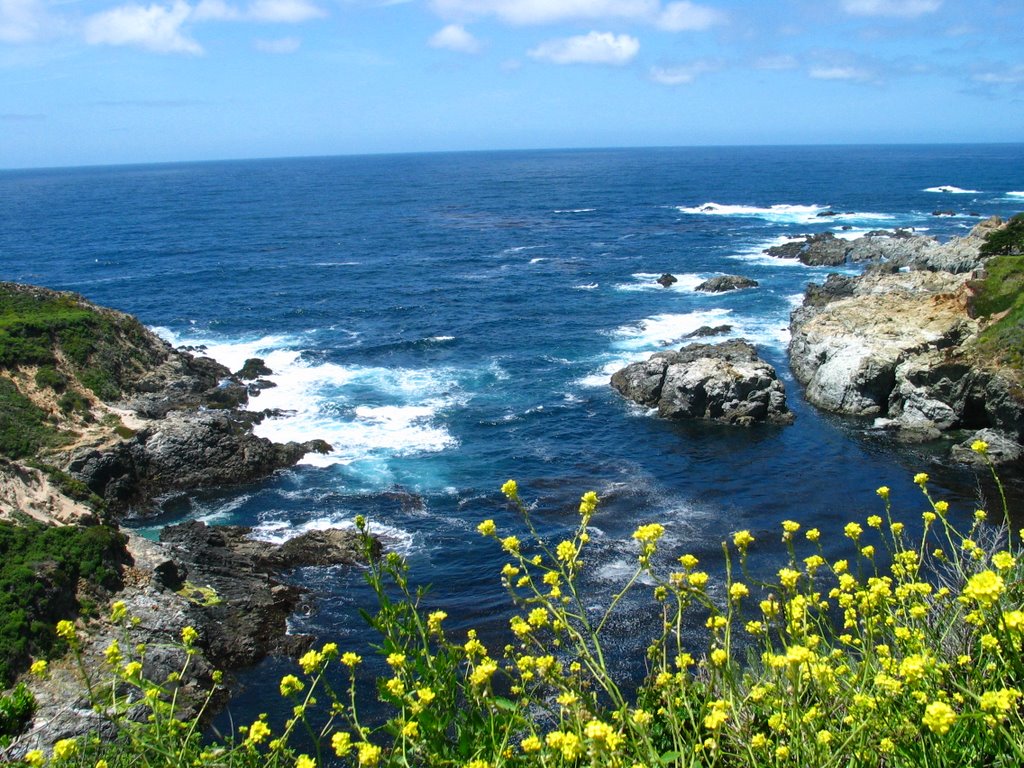


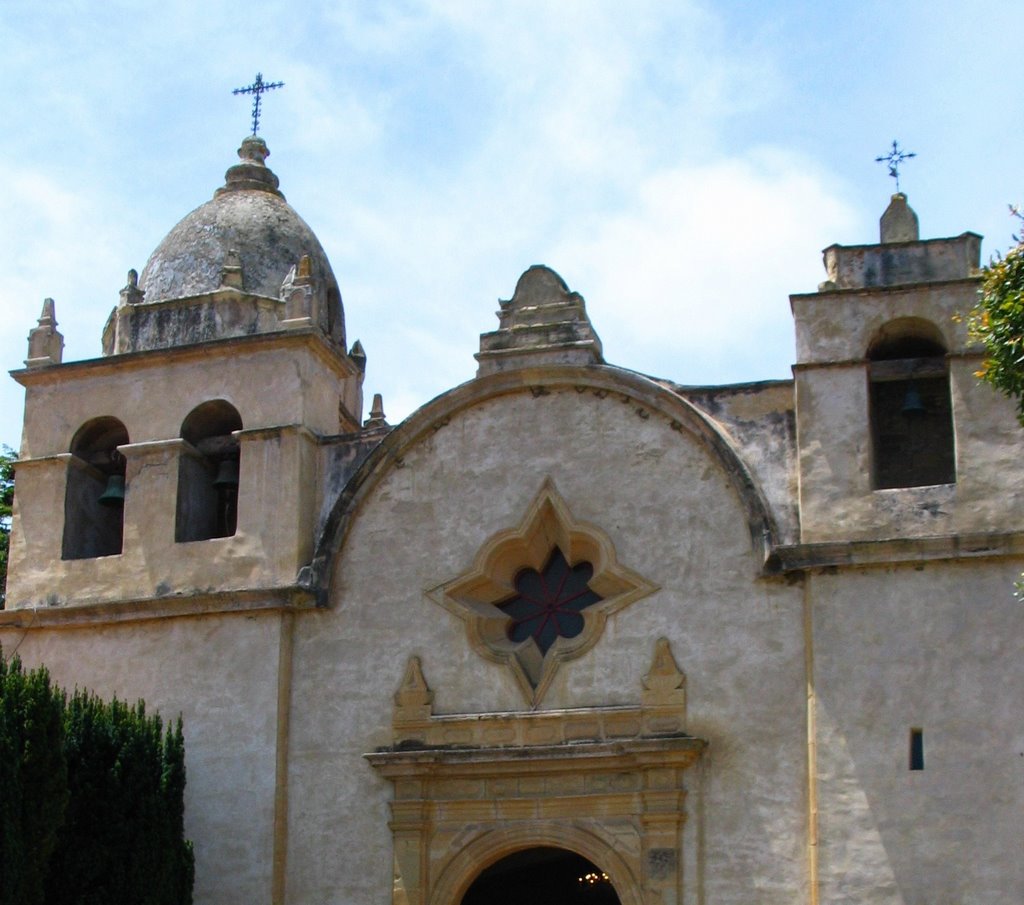


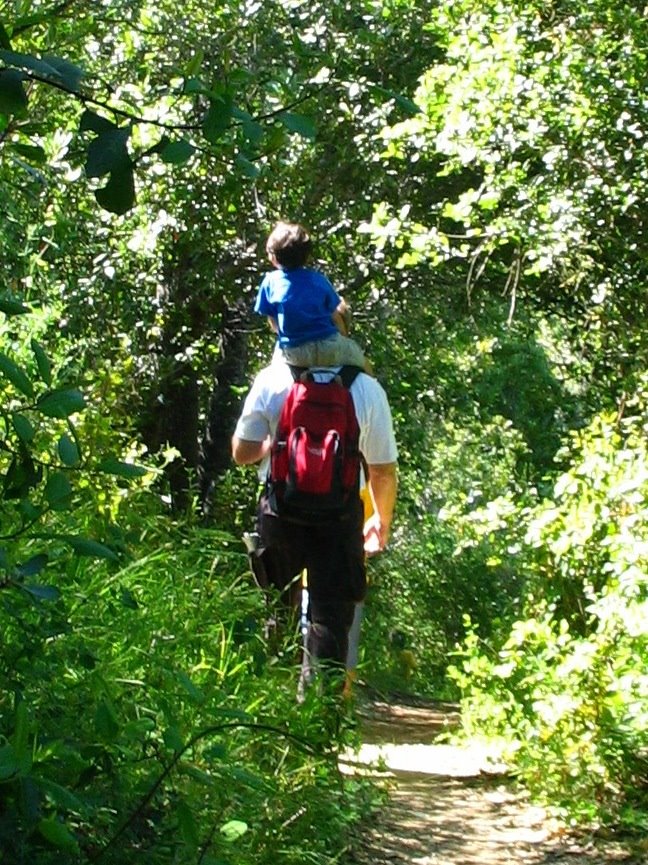
A little trip to Carmel Mission and the drive along the breathtaking Pacific Coast Highway
Thursday, May 25, 2006
Dreams come true in green...orange...blue
 Folks the $100 computers from MIT are here - these are the first real functional prototypes. In all the brightest colors :) You can take a sneak peek on Flickr. And more info on the neat UI.
And now its time for a challenge! You buy one for $300 and two kids get these for free! - The Pledge Bank Challenge
Tuesday, May 23, 2006
propaganda ... err ... posters
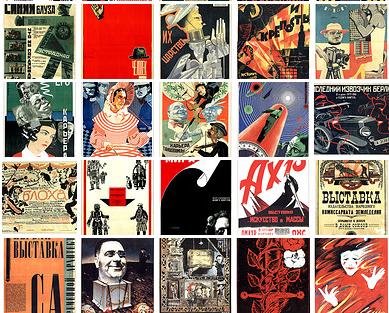
Fun stuff on flickr - USSR Posters. Though it claims to be all propaganda posters. Some are just adverts for plays and the circus. A neat collection - one for a play by Nikolai Gogol too.
Sunday, May 07, 2006
Christian Gangsta Rap
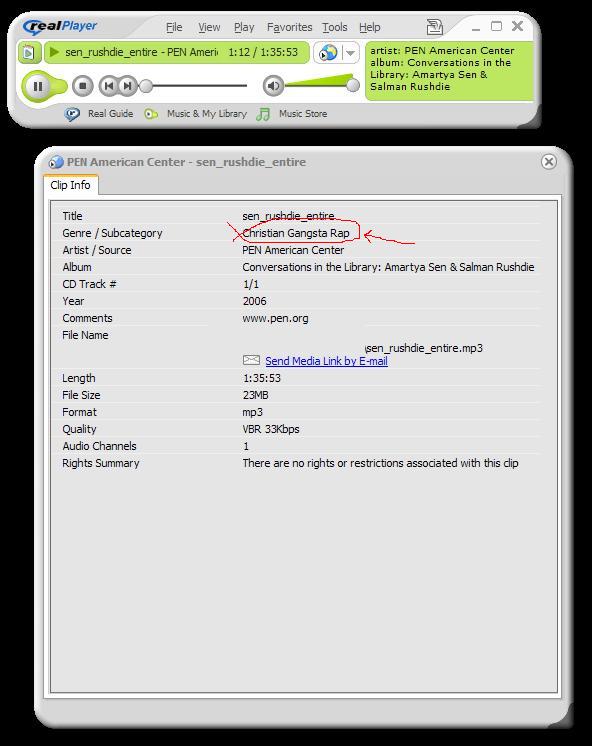
Just downloaded an audio recording : Conversation in the Library: Amartya Sen & Salman Rushdie (at the PEN American Center). And who knew I was a fan of (mark my words here) - Christian Gangsta Rap! That is what the mp3 file on their website is classified as.
If this is what rap is all about, can I have some more, please. For fans, here is a link to the recording.
Cannot believe that there are people who still believe intellectuals are mostly harmless. ha ha.
Thursday, May 04, 2006
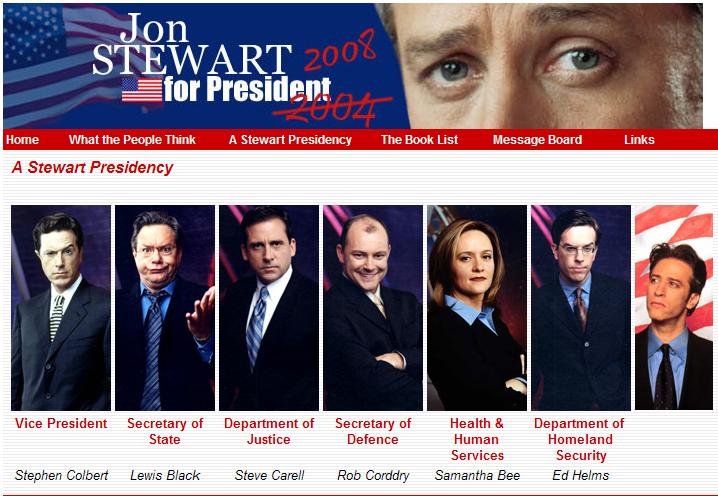
Colbert for VeeP
While in the process of forwarding the Colbert roast of Bush video to a couple of friends, I came across this nice little ad on gmail.

The hilarity continues - Jon Stewart for President - because he cares!
and here is the team :) I love the VeeP!


The hilarity continues - Jon Stewart for President - because he cares!
and here is the team :) I love the VeeP!
Wednesday, April 12, 2006
The Vinegar Test
Interesting technology for developing countries - a lot more going on, other than just cheap computing.
The vinegar test for cervical cancer - here.
"At the moment, five per cent of women in the developing world are screened for cervical cancer. In industrialised nations the figure is 70%.
Vinegar - acetic acid - could be used where the standard Pap smear is unavailable or too expensive."
"The researchers found that both techniques had a similar detection rate.
It could help health care workers make an instant decision as to whether a patient needs further treatment.
This is an important factor in areas where women live far from medical facilities.
Cervical cancer is one of the most common cancers affecting women, killing 200,000 each year.
. . . where scientists examine the cells for signs of pre-cancerous changes
It is the leading cause of cancer deaths in parts of Africa, Asia and Latin America.
The earlier it is detected, the better the chances of defeating it. If it is caught before it spreads beyond the cervix, 95% of cases are curable."
The vinegar test for cervical cancer - here.
"At the moment, five per cent of women in the developing world are screened for cervical cancer. In industrialised nations the figure is 70%.
Vinegar - acetic acid - could be used where the standard Pap smear is unavailable or too expensive."
"The researchers found that both techniques had a similar detection rate.
It could help health care workers make an instant decision as to whether a patient needs further treatment.
This is an important factor in areas where women live far from medical facilities.
Cervical cancer is one of the most common cancers affecting women, killing 200,000 each year.
. . . where scientists examine the cells for signs of pre-cancerous changes
It is the leading cause of cancer deaths in parts of Africa, Asia and Latin America.
The earlier it is detected, the better the chances of defeating it. If it is caught before it spreads beyond the cervix, 95% of cases are curable."
Tuesday, April 04, 2006
PCs for the 3rd world - The saga continues
So intel jumps onboard. The tech review article here. A older post on Negroponte's plan.
"On Wednesday, Intel unveiled a product it has demonstrated several times in recent months -- the Community PC, which is designed for use in rural India.
"On Wednesday, Intel unveiled a product it has demonstrated several times in recent months -- the Community PC, which is designed for use in rural India.
That PC reflects design ethnography of the sort Salvador practices. The Community PC is rugged, designed to withstand temperatures of up to 45 degrees Celsius and equipped with a special monitor and filters to deal with dust. It comes with a software-restore key that will rebuild the system's software at a keystroke if the PC fails. Finally, it can use a car battery as a backup power source, which is useful in areas where power failures are a daily fact of life. The PC will switch automatically between AC and DC power." - The technology review
Subscribe to:
Posts (Atom)